Hoang Ngoc Quang
Vietnamese certificates of origin for goods produced from imported materials. More than ten years of work on documents and customs procedures on the China-Vietnam-Cambodia route.
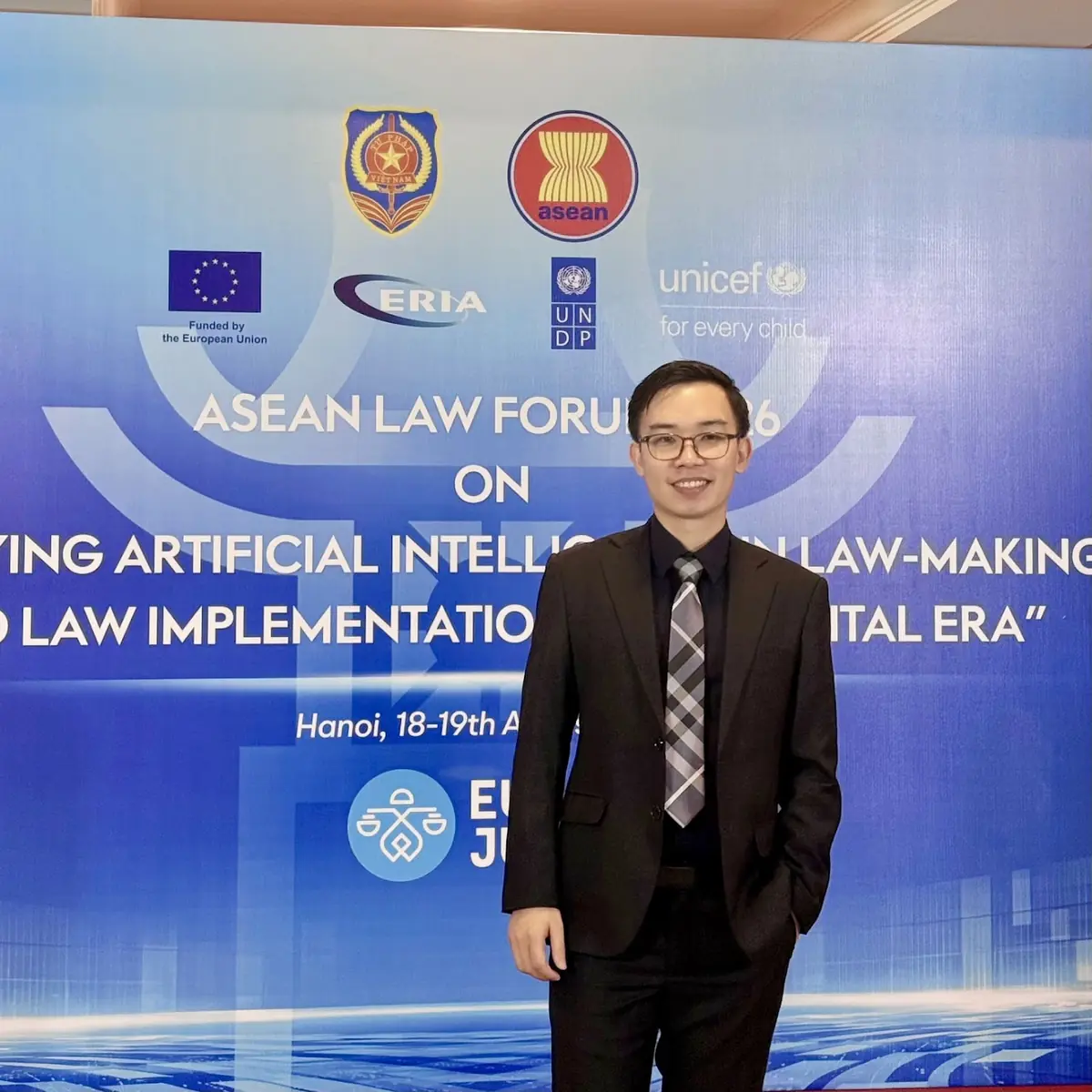
Hoang Ngoc Quang (QuangLogi)
Vietnamese certificates of origin for goods manufactured from imported materials
- In charge of the cross-border transport corridor between China, Vietnam and Cambodia.
- Daily work covers arranging transport, handling customs procedures, and preparing import-export document sets and certificates of origin.
- Works regularly in Chinese and English with partners, factories and agents in all three countries on the corridor.
- Trained as a lawyer in Course IX of the lawyer training programme for international integration at the Judicial Academy.
· · · LinkedIn · Facebook · X · Contact form
Origin questions come up earlier than you think
Issues relating to the origin of goods usually come up very early. A foreign investor has to answer this question as soon as the investment plan is under consideration: "If I manufacture in Vietnam under this plan, will the product qualify for a Vietnamese certificate of origin?" A manufacturer in Vietnam faces the question while negotiating an export contract: "Can you supply a Vietnamese C/O?" Some buyers say outright: "I will only buy if you can supply a Vietnamese C/O."
The investor or the company owner is not sure of the answer, but still commits money to the production project in Vietnam, or still signs a contract with a clause on supplying a C/O. Only some time later, when the goods have been produced and it is time to prepare the export documentation, do they find that the consignment does not meet the origin criteria for Vietnamese origin and does not qualify for a C/O. By then the money has been committed, the contract has been signed, and the price has been fixed on the basis of a preferential rate of duty that the buyer assumed would apply. The business plan is thrown into disarray, and the financial loss and the damage to the relationship with the buyer cannot be undone.
What I do
I answer that question early, before you commit money or sign a contract: whether your goods qualify for a Vietnamese certificate of origin, and what you need to prepare to be sure that the certificate will be issued.
In more than ten years of work on documents and customs procedures on the China-Vietnam-Cambodia route, I have seen that failure to qualify usually has three causes. First, evidence of the source of the input materials is missing. Second, the materials do not meet the origin criteria, whether assessed by change in tariff classification or by regional value content. Third, the production process is classed as simple working or processing operations. All three are decided when the business plan is drawn up, the materials are bought and the import declaration is lodged, that is, long before the day the C/O application is submitted. That is why the answer must come early, while there is still time to change the materials supplier, change the production plan, or change the contract terms.
For some consignments I have to answer plainly that they do not yet qualify. That answer is not pleasant to hear, but it is better to hear it before you sign than after.
Professional background
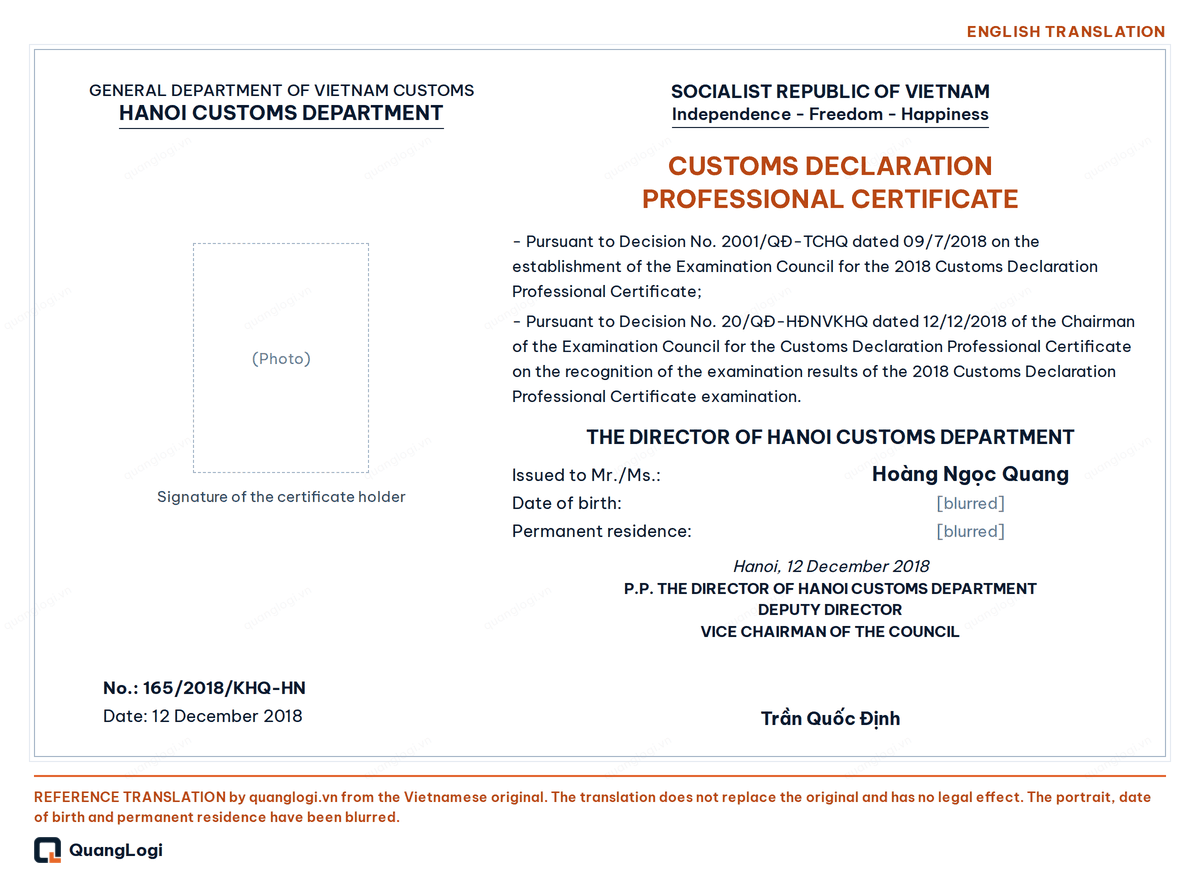
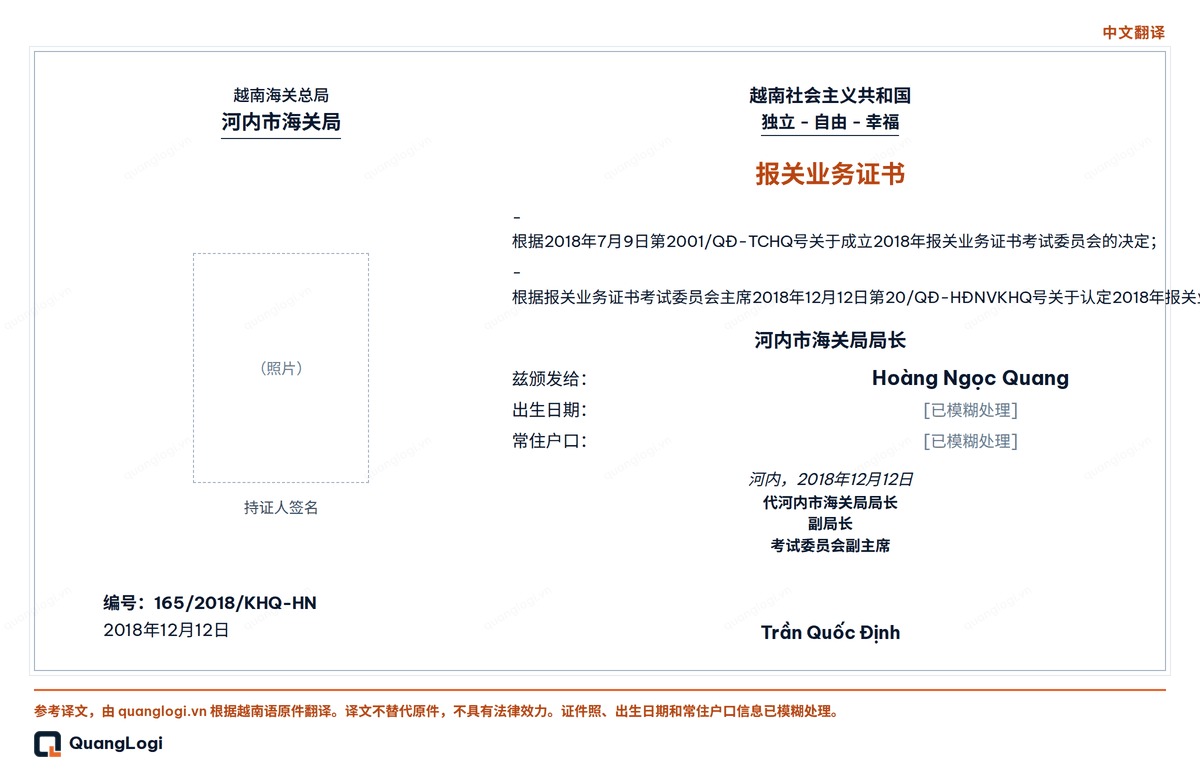
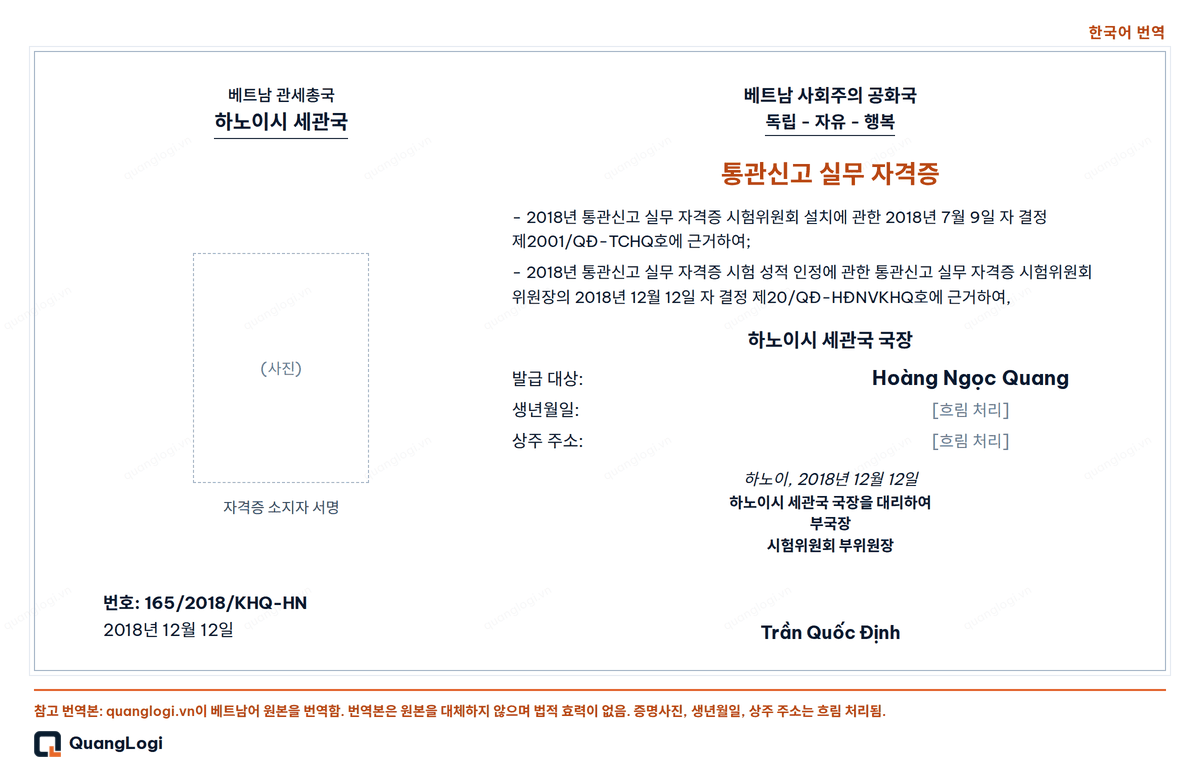
I hold a bachelor's degree in Economic Law and a customs declaration professional certificate, No. 165/2018/KHQ-HN, issued by the Hanoi Customs Department on 12 December 2018. I have an identification number as a member of staff of a customs broker, issued by the Customs Control and Supervision Department, General Department of Vietnam Customs, under Official Letter No. 249/GSQL-TH dated 20 February 2025. I am a member of the Viet Nam Association for Logistics Manpower Development (VALOMA) under Member Admission Decision No. 1003/QD-BCH. I am Vice Director of GIANG TO VIEN DUONG INTERNATIONAL TRANSPORT Co., Ltd. (Luchi Vietnam). I have been trained as a lawyer in Course IX of the lawyer training programme for international integration at the Judicial Academy. I do not yet hold a lawyer's practising certificate. The content on this website is professional information supported by cited legal instruments, not legal advice on a specific matter.
In every article that cites its legal basis, I give the number and the effective date of each instrument so that you can easily find it and check it for yourself. I work in Vietnamese, Chinese and English, and the content on this website is always available in at least these three languages.

Working principles
State the limits first
If a question goes beyond the scope of general information, I say so at the outset rather than give half an answer.
No commitments on matters outside my control
Every commitment on timing is conditional on the documentation being in order and clearance proceeding normally. There are no exceptions.
Confidentiality of client information
In the examples in my articles, the names, routes, goods and figures are always changed to the point where no one can be identified.